If your roof has substantial useful life left, compare conventional panels first. If you are replacing it, compare a solar roof against a new conventional roof plus panels. Evaluate both on the same scope and energy assumptions; appearance alone cannot tell you their long-term value.
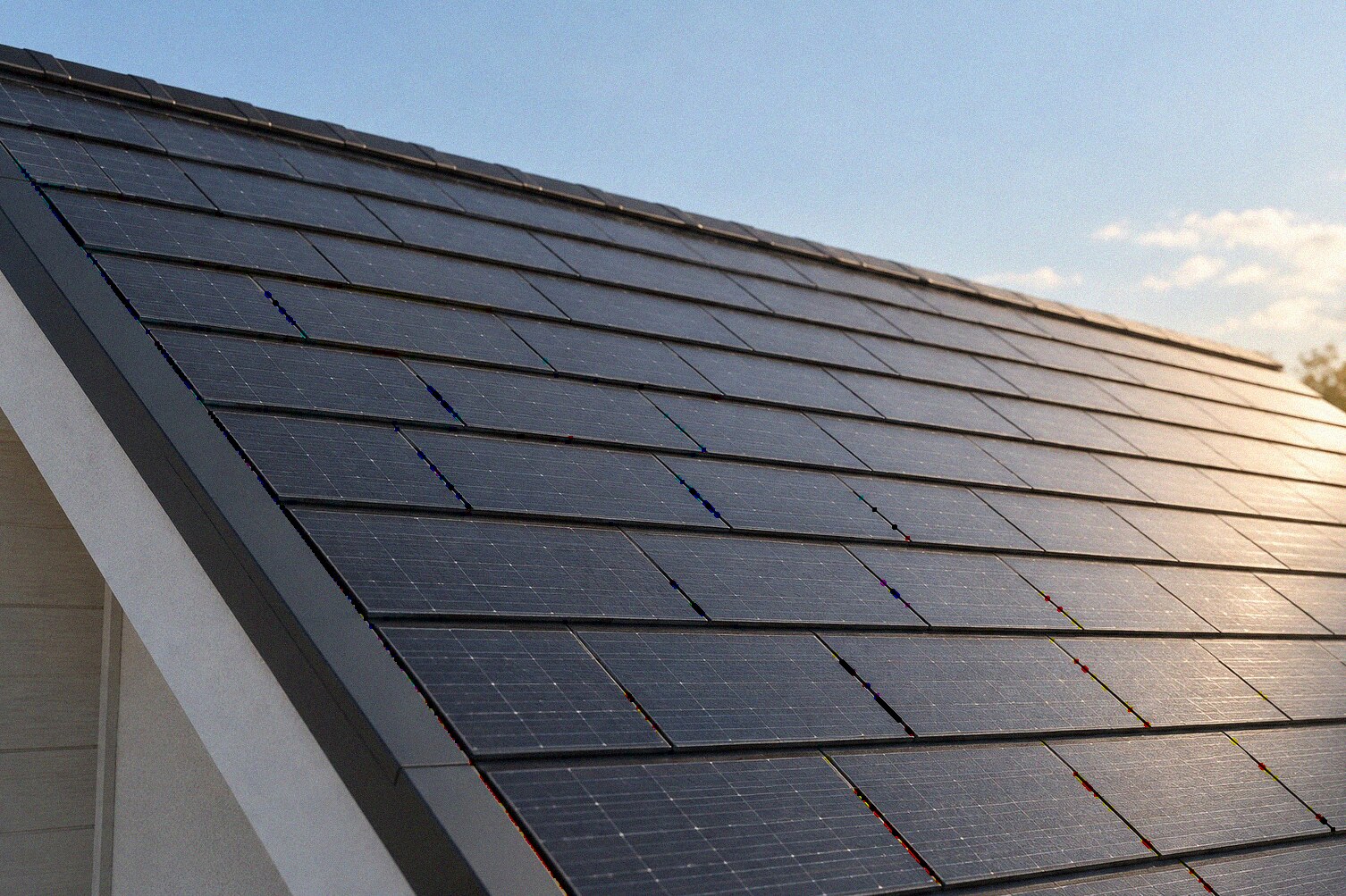
Two approaches to the same sunlight
Conventional panels sit above a weatherproof roof. Integrated solar roofing places generating material within the roof covering. Both use photovoltaic cells, but the construction scope and repair arrangements can differ substantially.
There is no useful universal winner. “Solar roof” covers different products, and “panels” covers different module, mounting and inverter combinations. Treat the comparison below as a way to organize proposals, not a ranking of brands we have tested.
| Question | Integrated solar roofing | Roof + conventional panels |
|---|---|---|
| What is being built? | Generating components form part of the roofing system. | A roof covering and a separately mounted generating array. |
| What should be priced? | All roof work, active and inactive roof areas, electrical equipment and installation. | Any roof work, panels, mounting, electrical equipment and installation. |
| What does it look like? | Appearance depends on the active material and surrounding roof components. | The array sits above the roof; layout, height and visible equipment vary. |
| What needs clarification? | Replacement part availability and responsibility for both electrical and roofing repairs. | Removal and reinstallation arrangements if the roof needs work. |
Make the roof decision first
Ask for a written roof assessment before committing to a solar system. Roof age is useful context, but the covering’s condition, past repairs and expected remaining life matter more than a generic cutoff.
For a roof that is ready for replacement, obtain a baseline quote for the roof alone. Then compare the additional cost and scope of each solar option. For a sound roof, ask what work the installer requires to mount the system and how that work affects the existing roofing warranty.
If an installer proposes leaving an aging roof under a new array, ask what a later removal and reinstallation would involve. Record the expected downtime, responsible contractor, storage arrangements and exclusions. Our roof replacement guide provides the full question list.
Compare energy on the same assumptions
Rated capacity, measured in kilowatts (kW), is not the same as electricity produced over a year, measured in kilowatt-hours (kWh). Request both. A visually larger installation may include non-generating roof sections, while a compact panel layout may occupy only the most productive roof planes.
Ask each bidder to identify the roof areas included, shading assumptions and expected production losses. A credible estimate explains its inputs. If two proposals produce different annual totals, establish whether the cause is system size, roof orientation, shading or a different modeling assumption.
Keep the utility assumptions consistent too. A proposal using an old net-metering example cannot be directly compared with one using your current Solar Billing Plan. Battery schedules, electricity price increases and future household loads should appear explicitly in the model.
Read the repair story before the warranty headline
Separate product coverage, installation workmanship, roof leakage and any production guarantee. These may have different providers, terms and exclusions. A long headline warranty does not tell you who pays for access, labor or removal of surrounding materials.
Ask what happens if one generating component fails, if the inverter needs replacement, or if the roofing contractor and solar installer disagree about a leak. Request the service contact and procedure in writing before signing. We do not assign a universal maintenance advantage to either category: the actual product and contract decide it.
Take these questions to both bidders
One comparison sheet
- Does the price include all roofing work, permits and electrical changes?
- What generating capacity and annual production are included?
- Are the same utility tariff and usage data used in both estimates?
- What backup equipment is included, if any?
- Who handles a roof leak, failed component and future reroof?
- What is the cash price, and what changes under financing?
- Which benefits depend on an incentive or an unconfirmed eligibility assumption?
The most useful comparison is the one you can explain without a sales presentation: the same house, the same roof scope, the same energy assumptions, and clearly assigned responsibilities.
Sources & scope
Product performance, site conditions and individual eligibility require their own verification.
- U.S. Department of Energy: From rooftops to building integration
- U.S. Department of Energy: Homeowner’s Guide to Solar
- California Public Utilities Commission: California Solar Consumer Protection Guide
- California Public Utilities Commission: Net Energy Metering and Net Billing
Should you replace the roof before solar?
A roof assessment and a clear scope of work are more useful than a universal age limit. Here is how to plan the sequence.